Dashboard / SaaS
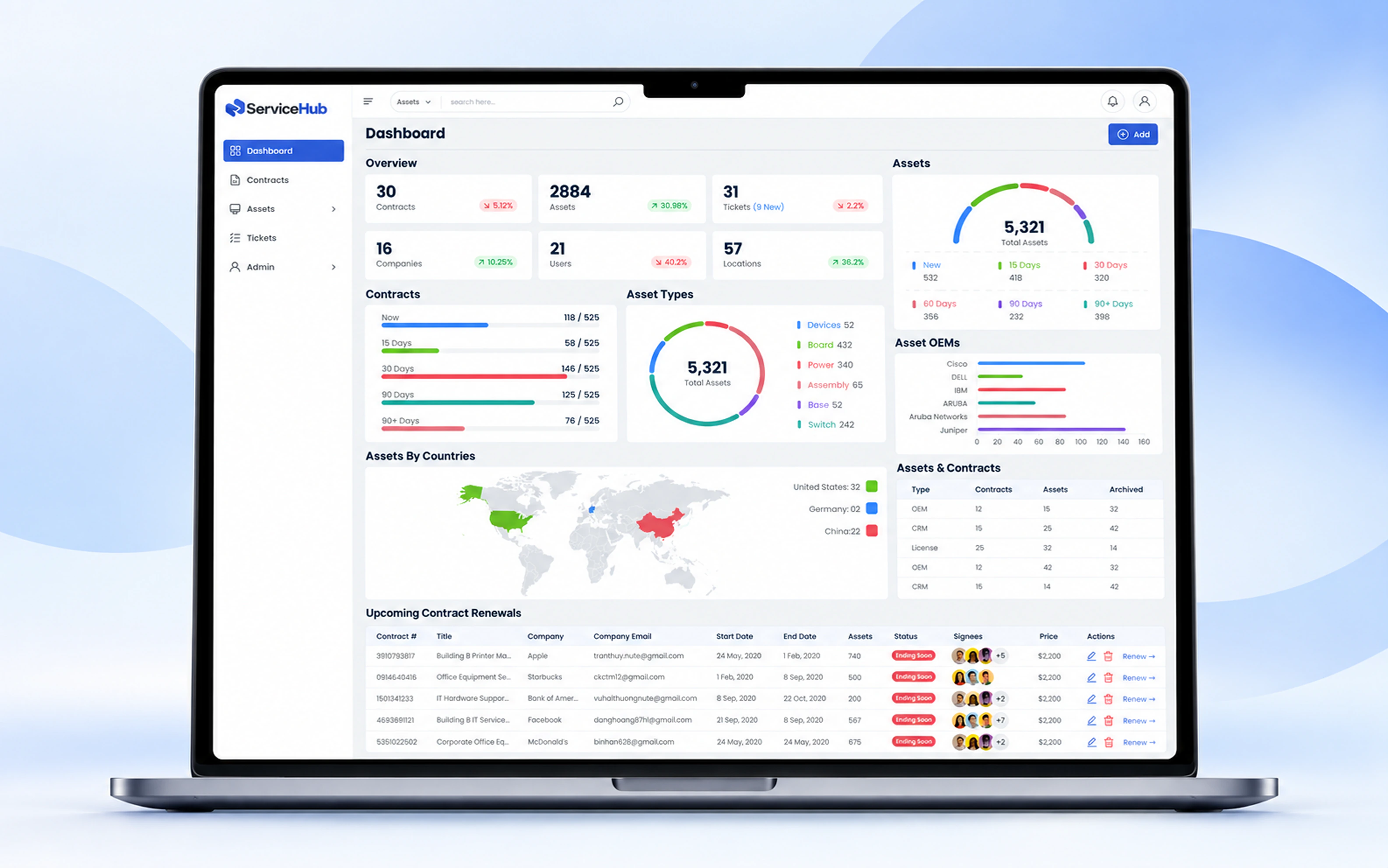
A data-heavy operations platform designed from the ground up to manage enterprise contracts, the assets covered under them, and the tickets raised against those assets.
A dashboard and web app built from scratch for a service company that manages enterprise contracts, assets, and the tickets raised when those assets need attention.
Ops teams were running everything through spreadsheets. Nobody had a clear answer to who owned an asset, which contract covered it, or which vendor to call when something broke. Finding the right vendor for one issue took hours, while contracts quietly auto-renewed without anyone noticing and cost the business real money every year.
A single platform now connects every contract, asset, and ticket to one data model. Issues can be raised, routed, resolved in-house or dispatched to an outside vendor, with every step tracked against the contract that covers the asset.
A dashboard and web app built from scratch for a service company that manages enterprise contracts, assets, and the tickets raised when those assets need attention.
A data-heavy operations platform designed from the ground up to manage enterprise contracts, the assets covered under them, and the tickets raised against those assets.
Before, operations teams tracked contracts, assets, and issues by hand across spreadsheets, with no way to see how they connected or who was responsible. After, contracts define what is covered, assets are logged against them, and tickets move through a clear raise, route, dispatch, and resolve cycle.
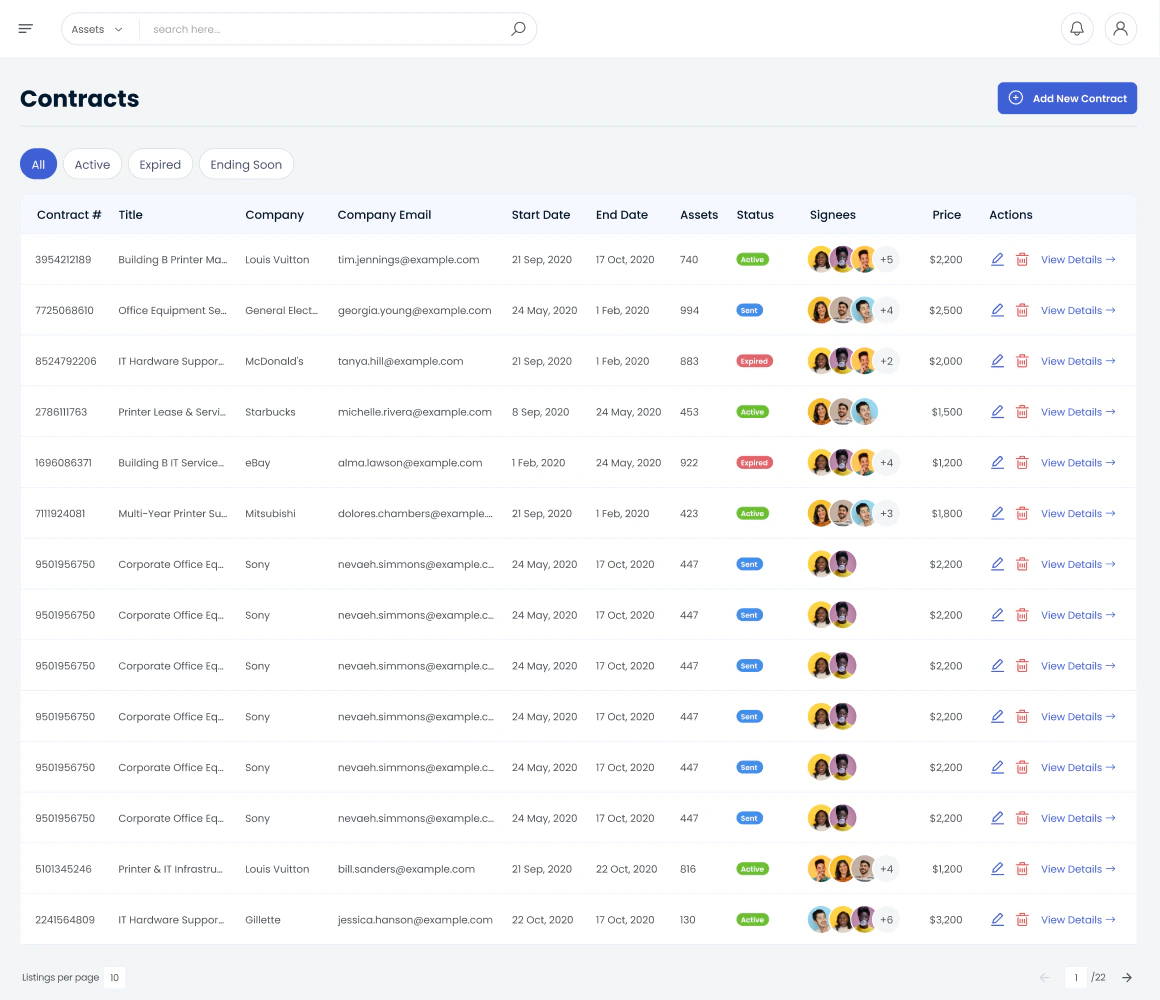
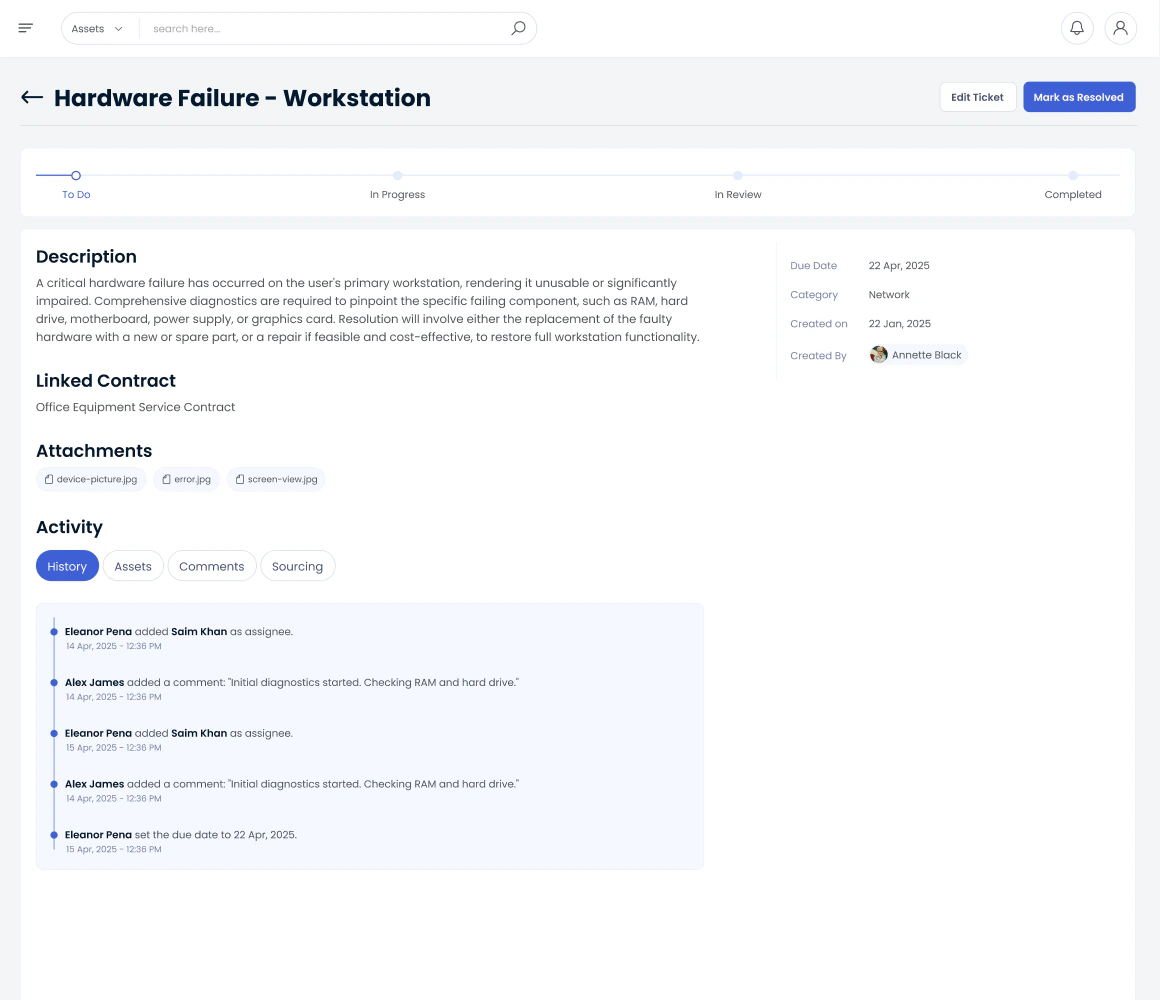
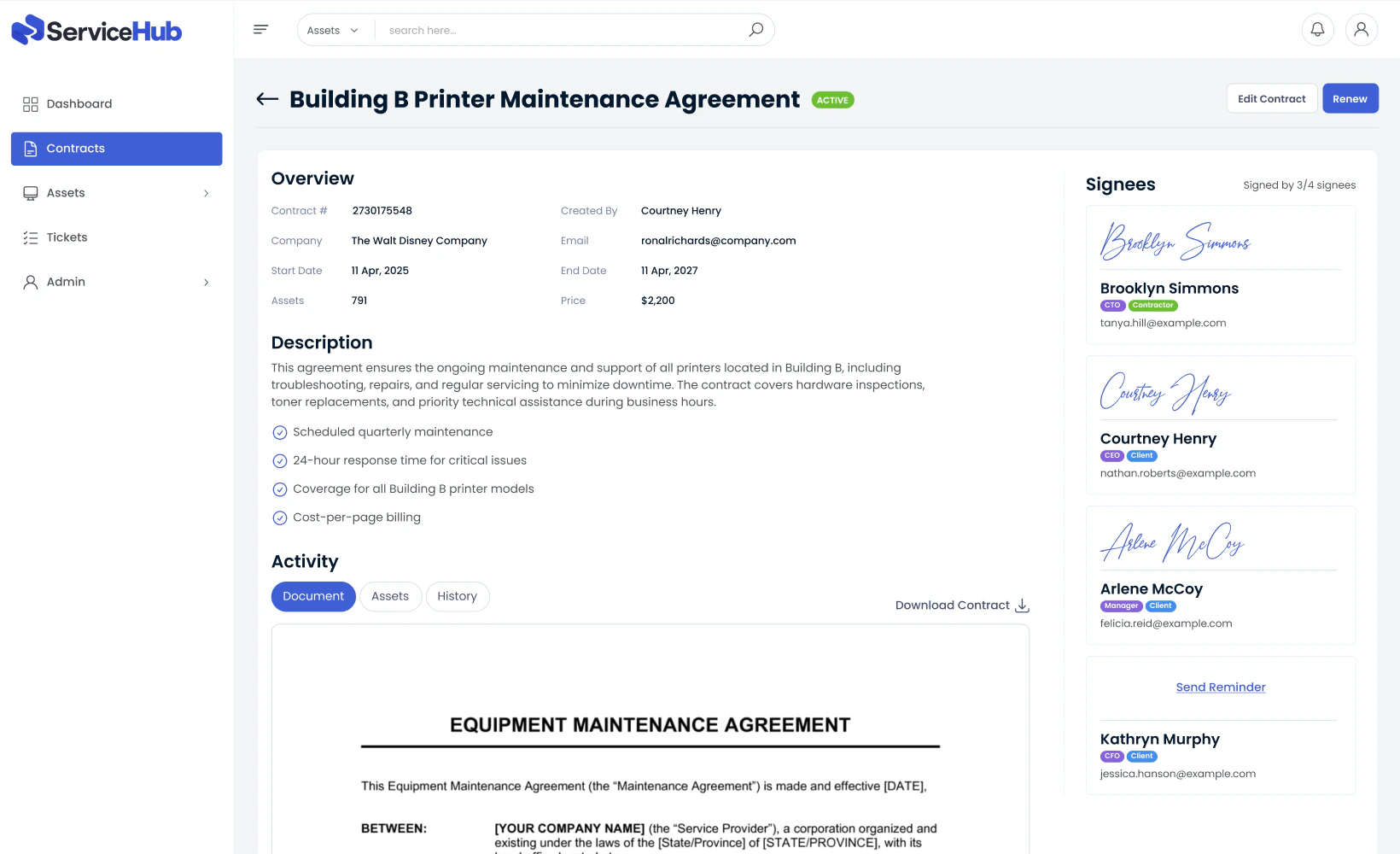
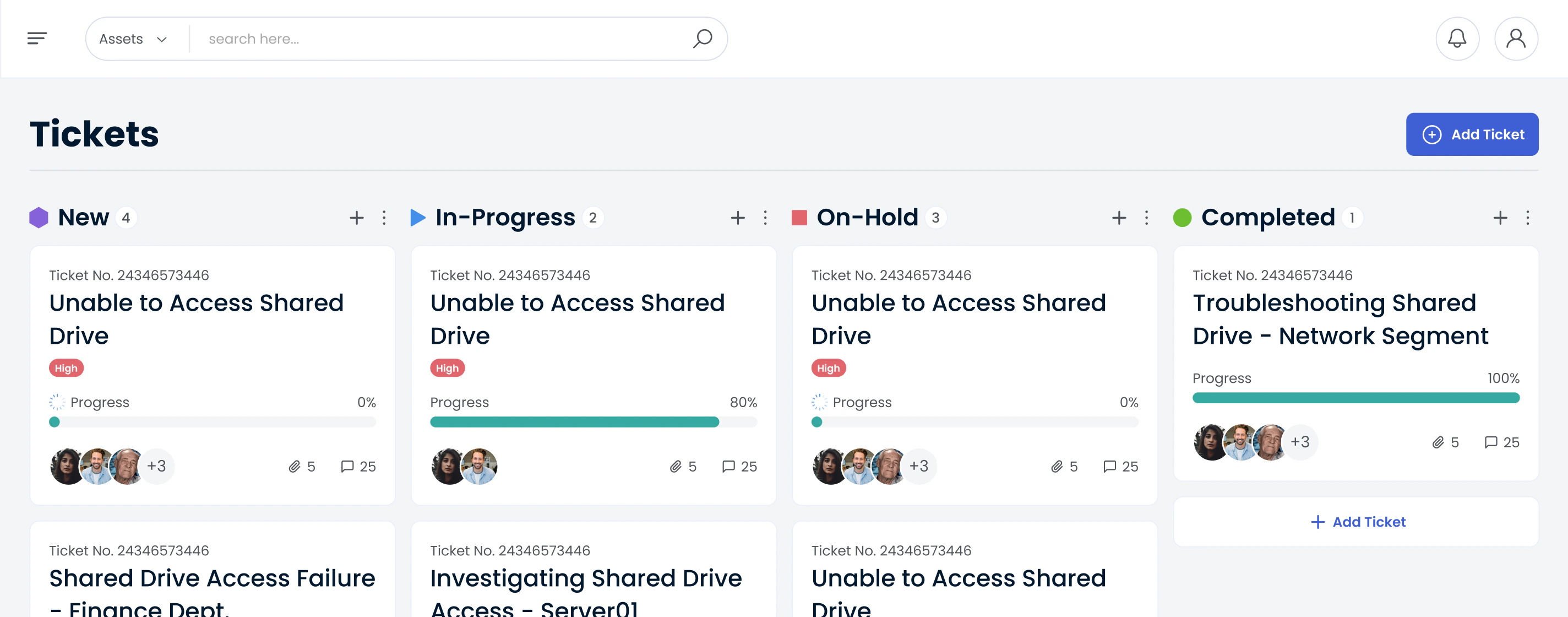
The product is built around one core relationship: Contract → Asset → Ticket. A contract defines what is covered and until when; an asset records the equipment or property under that agreement; and a ticket tracks work from initial report through routing, dispatch, resolution, and history. Admins see every client, contract, asset, and ticket, while clients see and manage only their own account.
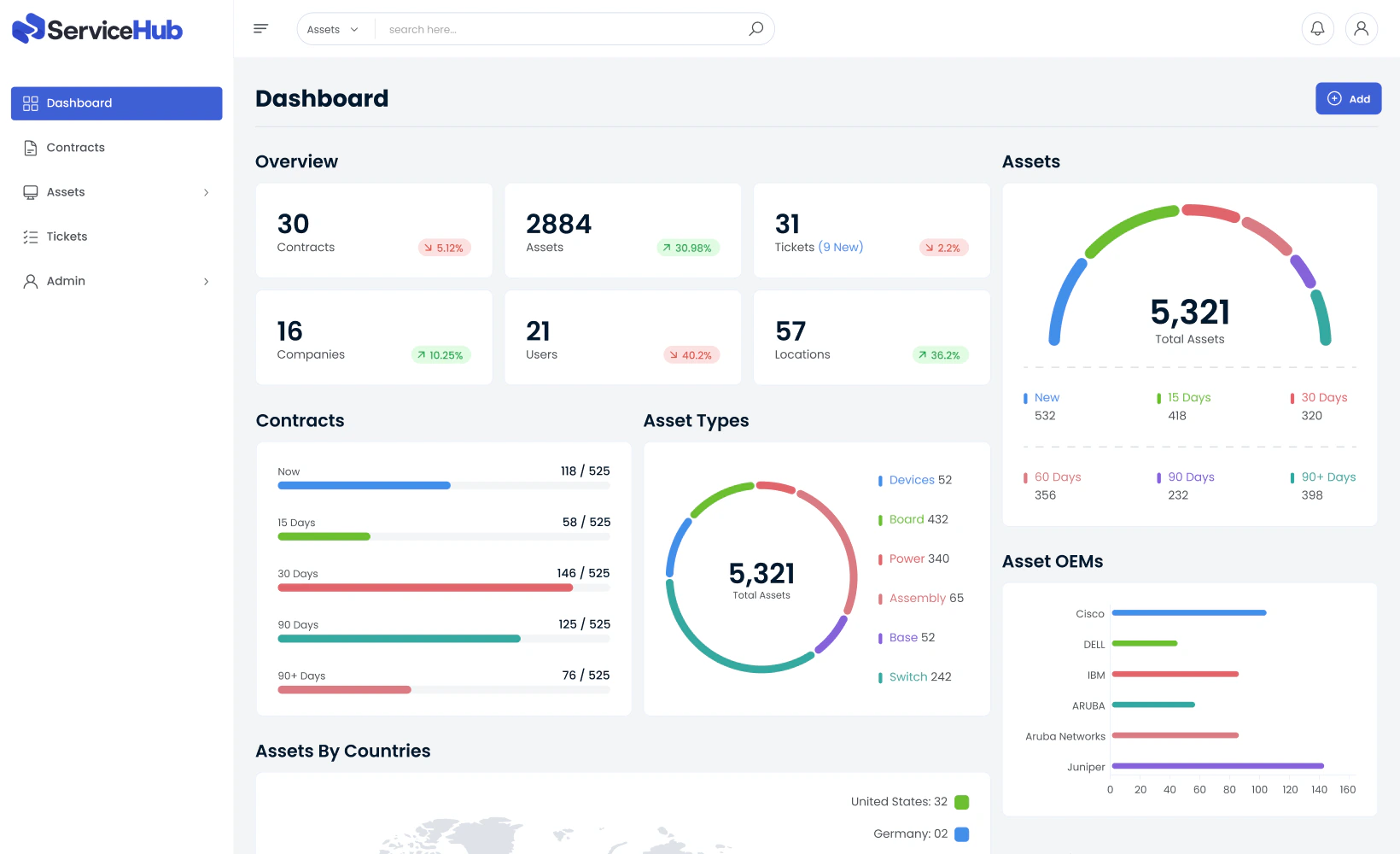
Status badges, dashboard gauges, contract and asset detail cards, and ticket tables create a consistent interface for dense operational data.
Primary
#3E60D5
Heading
#001930
Description
#50555C
Alt Background
#F3F5F7
Aa
A quiet typeface built for dense operational data.
Regular: body and supporting copy
Medium: controls and emphasis
Bold: headlines and moments
The platform covers the admin dashboard, contracts and renewal dates, contract detail with linked assets and tickets, a scoped client portal, and the complete ticket flow from raise and route through dispatch and resolution.
Mapped how operations teams actually tracked contracts, assets, and tickets, and identified where the spreadsheet-based process broke down.
Contracts, assets, and tickets live in the same graph, so nothing gets tracked twice.
Vendor lookup and ticket routing that used to take hours now takes minutes.
Contract renewals are visible ahead of time instead of auto-renewing silently.
Tell us what you're trying to achieve, what's getting in the way, or where you're not sure what to do next. We'll bring a different perspective.
Let's build what matters.
Start a conversation